
You may have read bullish newspaper reports that talk of a global growth recovery, alongside discussion of the world economy firing on all cylinders.
This narrative of global recovery coincides with a slowdown in UK growth, at least relative to the post BREXIT pick up, and occasionally seems to be utilised to diminish the UK and generally generate a feeling of doom among the worried.
So it is worth asking what the facts are, after all while the OECD has been oft quoted talking of a “synchronised global up-turn” what they have actually said is “synchronised short-term global up-turn” which is perhaps a crucial difference (emphasis added).
Global Recovery Facts
Pictures paint many words so to begin with let us examine the long term GDP growth charts for key economies and see how this global up-turn compares and as we get to hear lots about the EU let’s start there.

Source: Tradingeconomics.com Click/Tap to enlarge
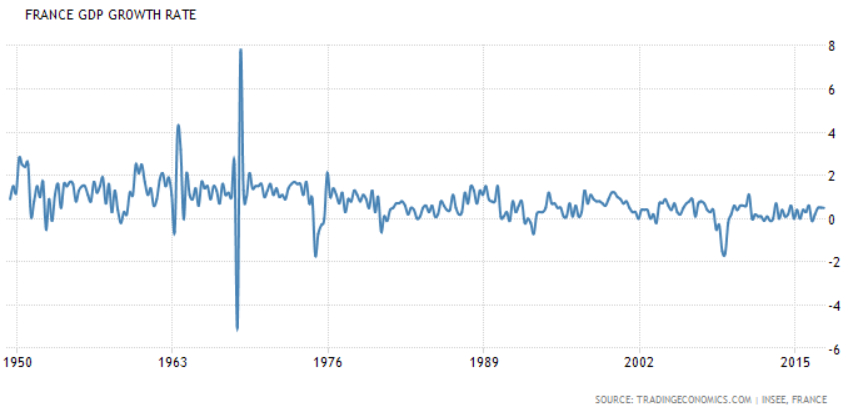
It is worth pointing out (while trying really hard not to make sarcastic comment like: WoW, or Flying Up) that like most economies the EU posts quarterly growth figures based upon the growth that quarter.
By comparisons the US, with a long track record, quotes “annulaised” figures each quarter, so extrapolating out twelve months from three. www.tradingeconomics.com (which is a really impressive, free to use, data portal) report this data as it is reported, hence US growth looks both stronger and much more volatile than other regions (a change in growth from 0.3% to 0.7% doesn’t look big on a chart, they’re both small numbers, 1.2% to 2.8% however can look big):
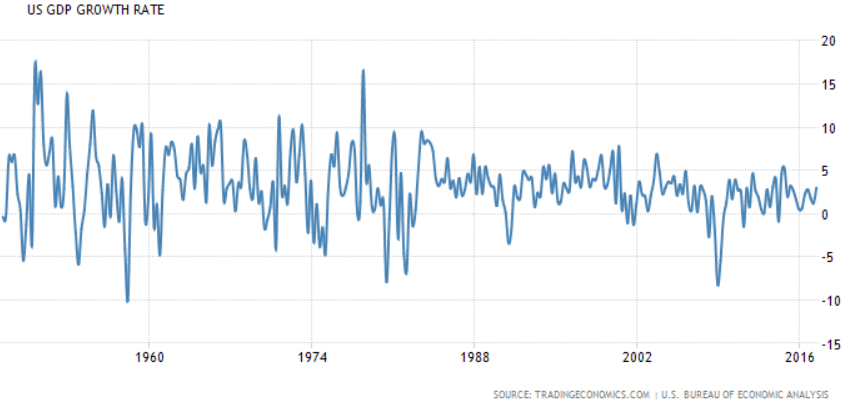
Source: Tradingeconomics.com Click/Tap to enlarge
Japan
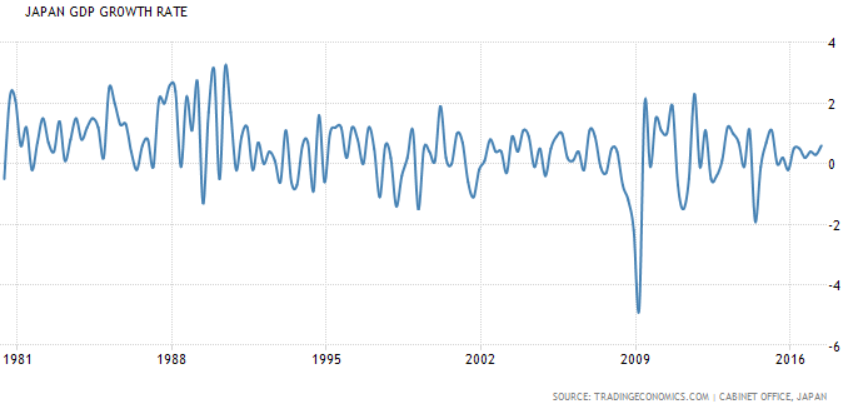
Source: Tradingeconomics.com Click/Tap to enlarge
China
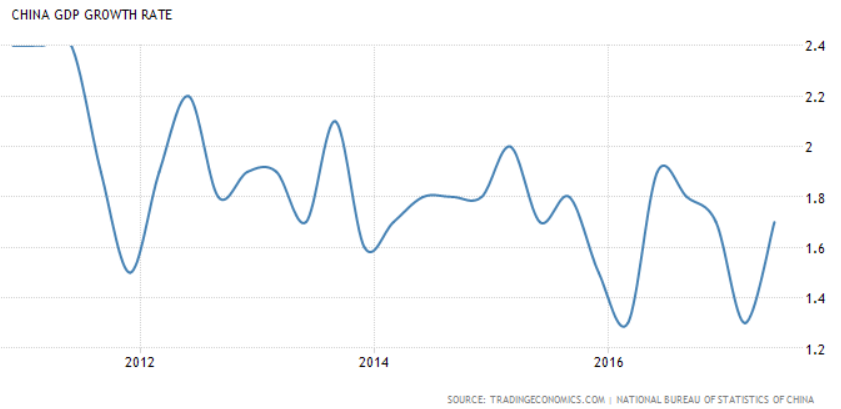
Source: Tradingeconomics.com Click/Tap to enlarge
China isn’t very conclusive as it’s a short data set for these providers….but.
UK
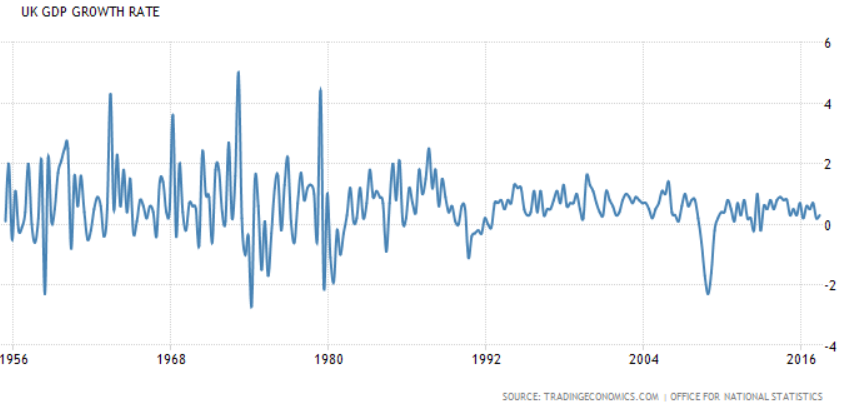
Source: Tradingeconomics.com Click/Tap to enlarge
Perhaps having started with the EU we should look at key economies separately:
Germany

Source: Tradingeconomics.com Click/Tap to enlarge
France
Source: Tradingeconomics.com Click/Tap to enlarge
Italy
Source: Tradingeconomics.com Click/Tap to enlarge
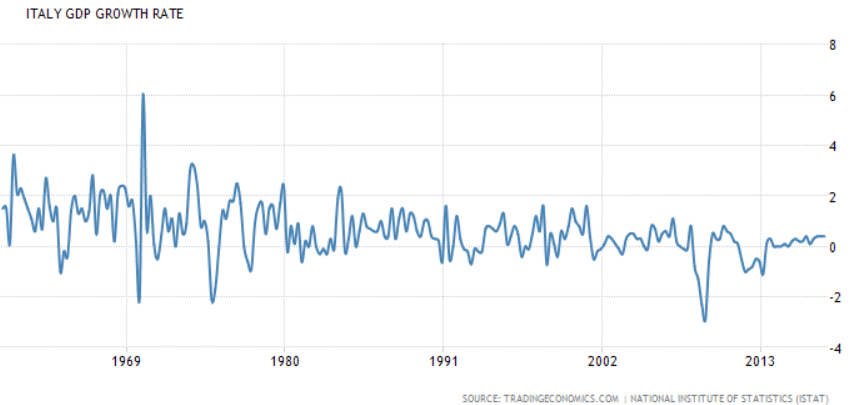
Frankly anything positive is a blessing for Italy
Spain
Source: Tradingeconomics.com Click/Tap to enlarge
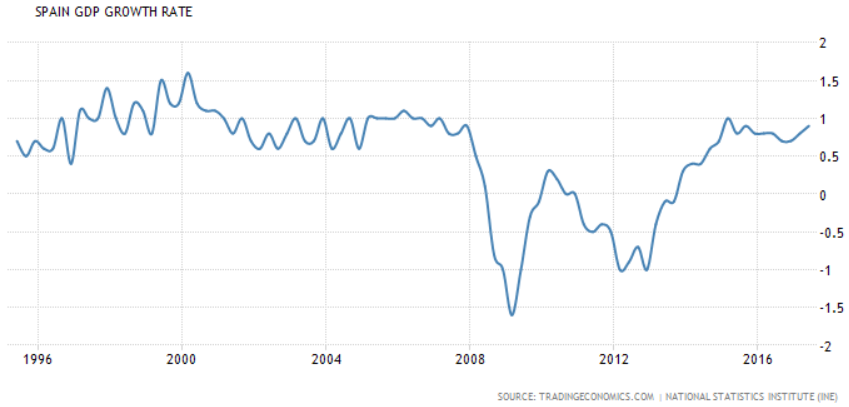
Compared to where it has been Spain has made progress but it needs to make a lot more.
Now this all looks singularly unimpressive if you were under the impression from the “bash your own economy” press we were lagging in a glorious sunny upturn, or if you had read in the financial press how the global up-turn justified asset prices.
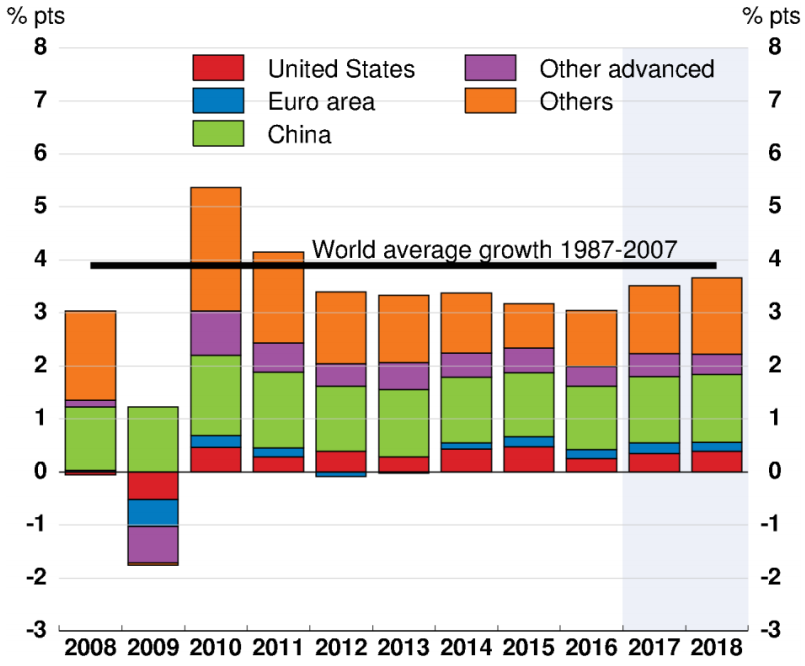
You might ask if the OECD had egged things on, which frankly they haven’t. In addition to pointing out this was a short-run up turn they also make great effort to point out many problems and reforms that need to be made to get global growth back on track to pre-crisis levels let alone boom levels:
Source: OECD Interim Economic Outlook Sep 2017 Click/Tap to Enlarge
However there are other positive signs, for instance the authoritative Dutch CPB global trade surveys remain positive after a shaky start to 2016:
Global Trade

Source: cpb.nl Click/Tap to Enlarge
Note however the pick up in the immediate post Donald reflation hype period followed by a bit of a fall back in pace.
Global Industrial Production
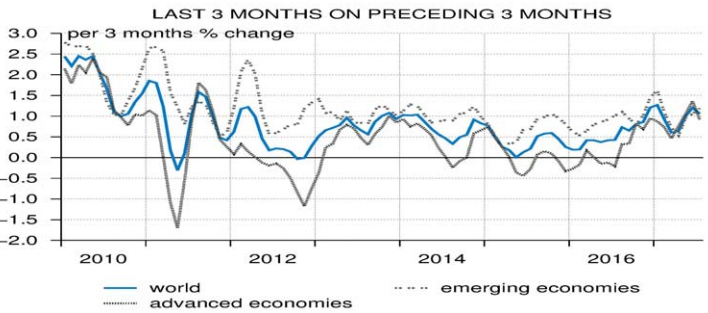
Source: cpb.nl Click/Tap to Enlarge
While the JP Morgan Global PMI which again was worryingly weak in 2016 remains steadily positive and currently at a recent high (just)

Source: Markit/JP Morgan Click/Tap to Enlarge
Overall this is a picture of a global economy ticking over, with no sign of incipient recession, nor frankly of a boom that justifies extreme asset prices.
Additionally we must consider whether this is satisfactory in light of Central Bank money printing excess (discussed HERE), Chinese stimulus that since 2016 has smashed all records for excess (more soon in another post) and leading economies such as the US and France taking on much more government debt than they have produced in economic output over recent quarters.
Answering that is an opinion…..and in this case I’m happy to share:
No it’s not satisfactory.
In fact as the OECD Interim statement points out the key problems have not gone away and many are worse. What the excess has provided is yet another brief relief rally in a larger trend. It has bought governments time to improve policy.
Time that, as always before, appears to be being wasted by our leaders.